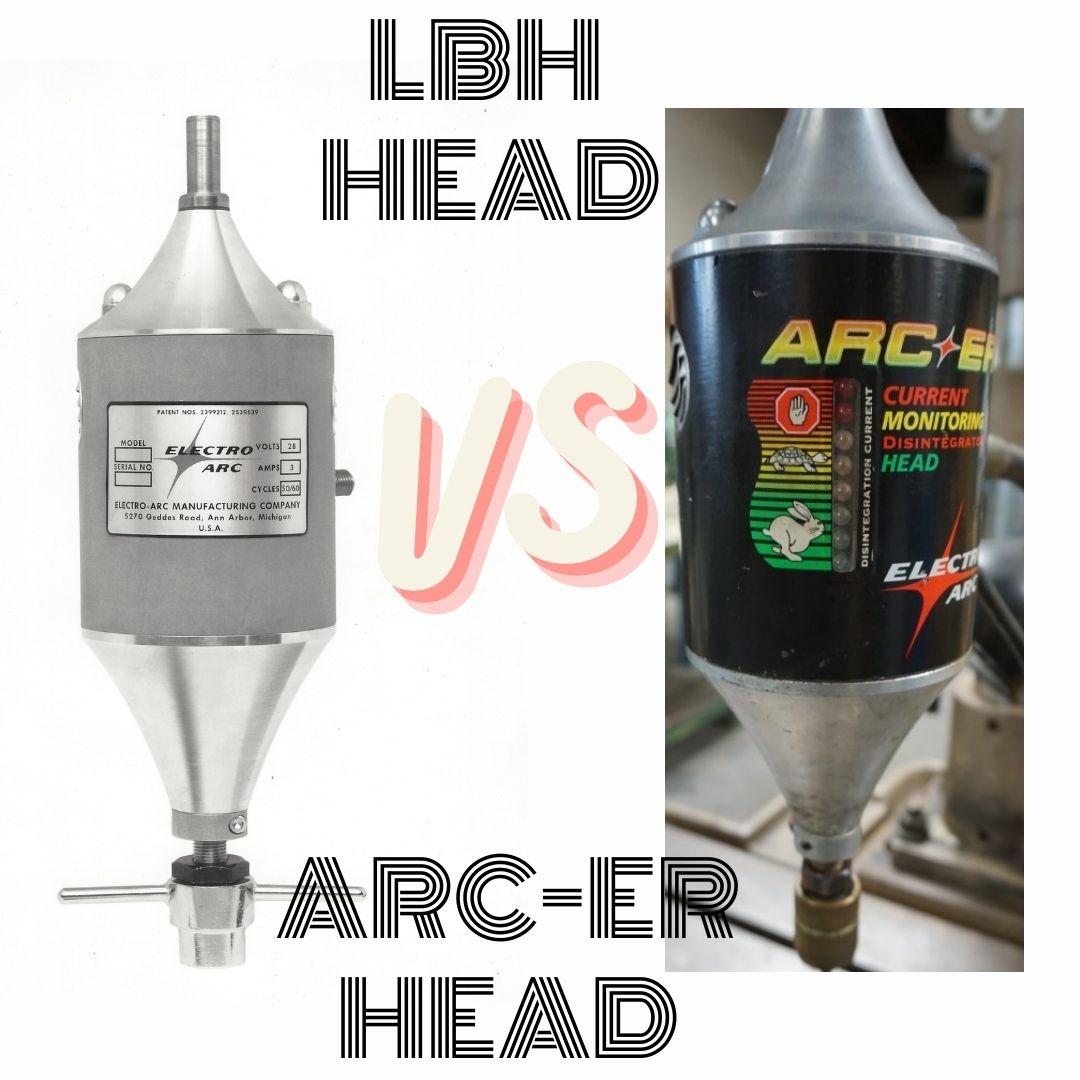
In November of 1966, Electro Arc announced the LBH head. A new fast-cutting disintegrator head for removing broken drills and taps. The model LBH disintegrating head incorporated a bearing-mounted, hardened shaft that increases cutting speed by providing extra rigidity. Simple construction reduced the amount of maintenance this head would need to the bare minimum. This head provided you with the option of disintegrating at any angle. You could disintegrate with electrodes from .010 up. At the time, this head was standard for Electro Arc metal disintegrators including the 3-S and 1-S.
The LBH head on portable disintegrator holding fixture
The LBH head is now obsolete. In September of 1998, Electro Arc released its replacement the Arc-er head. Now standard on a number of our portable and tabletop machines, the Arc-er head can also be used in a number of machine configurations. This upgraded head features a current monitor for ease of use. This feature allows you to easily determine when to adjust your disintegration.
The Arc-er head was introduced in 1998
Disintegrating head applications allow you to easily use the Arc-er head with a number of our metal disintegrators. Check out the configurations for your Arc-er head below. You can use the Arc-er Head with a number of machines in your shop. You can also use the Arc-er head directly on your workpiece. We also offer magnetic fixtures for use with your Arc-er disintegrating head.
Electro Arc introduced the Carbide Impregnator in June of 1964. This bench-type carbide impregnator hardens wear surfaces of tools. You can use this process to extend tool life and reduce downtime and maintenance. Cratering, galling and chip abrasion are substantially reduced. You will find this plug-in-hand tool easy to use. A carbide tip is passed over the wear surfaces or land of the tool. The vibrating tip fuses tungsten carbide by electrical spark discharge into the metal surface. The carbide deposit adds hardness and wear resistance to the surface metal without altering toughness and other mechanical characteristics.
Examples from case studies show increased life of tools:
The carbide impregnator deposits tungsten carbide to a depth of .0005 to.001 in the metal and builds up to .0003 tolerance regardless of the length of operation. You can pass the impregnating tip over the surface many times until you are satisfied with the desired deposit. The impregnation process uses a special grade of carbide suitable for impregnation.
Electro Arc’s Carbide impregnator operates on a 120 volt, 60 cycle current. The cabinet is made with16 gauge reinforced steel with steel side handles for easier handling. A convenient expanded metal basket is used to store the plug-in hand tool and cord. The tool’s net weight is 35 pounds.
Applying the Principles of Carbide Impregnation
You are probably wondering what kind of applications the carbide impregnator has. We published an engineering bulletin in the 60s with a case study “Applying the Principles of Carbide Impregnation to Circular Saws” about Havey Aluminum Company’s application of the Carbide Impregnator. A prime extruder of titanium and aluminum in the United States, Harvy aluminum had a sizable investment in 36″ diameter circular saws for cutting billets. Numerous studies and reports for cutting manufacturing costs and determining shop procedures revealed that no saws of any kind would stay “on the lin” for more than 12 hours, and it was best to stop to change at six and three-quarter hours because of a variety of negative factors which thereafter started to develop.
Harvey Aluminum gave Electro Arc a 16″ circular saw with 80 teeth to carbide impregnate, the theoretically critical crescent of about 1/64 of a square inch on each side of the teeth. The carbide impregnation of the 16″ saw took about two hours. Harvey Aluminum then put the saw into operation and inspected it at the end of 80 hours of continuous operation. They found there was an increase of over 600 percent over any other saw used before.
On the strength of these results, Harvey Aluminum immediately purchased an Electro Arc Carbide Impregnator so that they could continue to receive this extraordinary increase in all of their saw operation. In addition to this, after receiving the machine they began to experiment in other areas of their plant operations. The Extrusion Department impregnated four sets of dies and reported an increase of over 1000 percent. Further use proved that the slitting saw operation was further improved by impregnating the entire tooth rather than just the crescent.
This application at Harvey Aluminum is an excellent sample of what users of the Electro Arc Carbide Impregnator experience when they have the chance to couple the impregnator with their own knowledge against wear-life problems.
Various size electrodes in different levels of use with holders
An electrode is an electrical conductor, Electro Arc electrodes, formerly referred to as Disintrodes, are hollow tubing made of graphite, copper, or Molybdenum.
Electro Arc machines will operate with any material that conducts electricity as the electrode. Metal disintegration works on the principle of vibration, electrical spark, and coolant. The cutting power is a low voltage rectified DC current. Sixty sparks are discharged a second between the electrode and the workpiece. The coolant is passed through the hollow electrode onto the workpiece causing a thermal shock (heat and coolant). The material is fractured into minute particles and washed away by coolant. Both the electrode and the workpiece erode during the cutting process. With this in mind, the following information should then be considered.
Melting Temperature of various materials: Molybdenum 4600 degrees F Copper 2000 degrees F Brass 2000 degrees F Steel 2500 degrees F
Attaching an electrode
It is important to use an electrode material that will break down less than the workpiece. Molybdenum has this advantage. The melting temperature is double that of the other electrode materials, which means you will erode more of the broken tool and less of the electrode. The disintegrating time will be faster and the labor cost lower. In comparison, other lower melting materials, such as copper, erode as rapidly as the work material raising the labor cost for removing broken tools. Molybdenum is a more expensive material to use as the electrode; however, the savings in labor in removing broken tools more than justifies the cost – a proven fact in the industry for over 25 years. Thousands of disintegrator customers use molybdenum or comparable high-priced material in the electrical discharge process.
Electro Arc electrodes are recommended for removing broken taps, drills or disintegrating any other hardened materials. A 12″ long electrode will remove approximately 30-35 taps. Studs and bolts, because they are not as hard as taps and drills, will cause the electrode to erode somewhat faster.
Electrode chart for removing various size screws:
1/4″ diameter screw requires a .200 diameter electrode 5/16″ diameter screw requires a .250 diameter electrode 3/8″ diameter screw requires a .290 diameter electrode 1/2″ diameter screw requires a .375 diameter electrode 9/16″ diameter screw requires a .437 diameter electrode 5/8″ diameter screw requires a .500 diameter electrode 3/4″ diameter screw requires a .625 diameter electrode 7/8″ diameter and larger screw should be removed by making two or three holes in the screw or bolt. The diameter of these electrodes are close to the tap drill size for various threaded holes. After disintegrating you should be able to run a tap into the hole to remove the remaining shell. When making two or more passes to remove a stud, a certain amount of picking time is required to remove the remaining pieces. Please see sizing an electrode for information about which electrode to use for an AC machine, which electrode to use for a DC machine, which electrode to use for a bolt eater, and methods to remove bolts, dowel pins, and drills with graphite electrodes or molybdenum electrodes. Contact us to purchase electrodes.
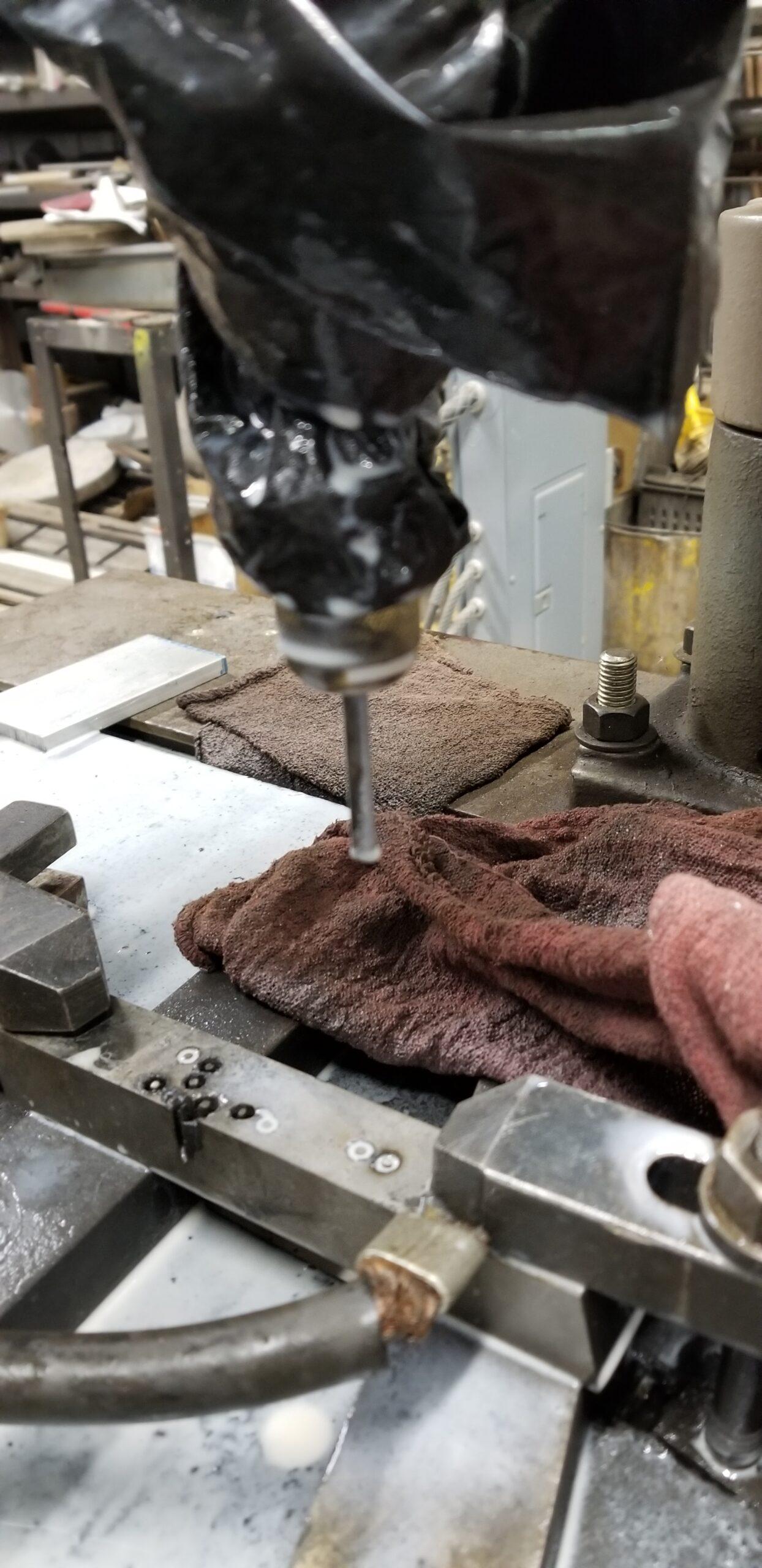
Electro Arc metal disintegrators use a thick clear or black “splash bag” to contain the coolant which is continually running through your Electro Arc metal disintegrator and the sparks metal disintegration process creates. This plastic bag is custom made to fit the area between the head of your metal disintegrator and the item you are disintegrating. Splash bags contain the coolant and shield the operator from sparks during the metal disintegration process. A splash bag is attached to the metal disintegrator head to cover the area you are disintegrating.
Electro Arc metal disintegrator set up with a black splash bag
The advantage to using a clear splash bag is that you can see the metal disintegration process, but this also means looking into the arc weld sparks produced during metal disintegration. However, as you are operating your Electro Arc metal disintegrator, your attention will be on the power controls and auto-feed functions so it is unlikely you will be looking directly at the metal harmful arc welding sparks anyway. The sound of your metal disintegrator will clearly indicate to you the progress that you are making with the disintegration job you are conducting and the process is quick, so there is no reason to be staring into potential eye harming arc sparks. Please note that we do not have clear splash bags available for purchase.
As weldors know, eye protection is required during the welding process because the infrared light can cause permanent damage to your eyes and lead to cataracts. The advantage to Electro Arc metal disintegrators is they do not require welding experience to operate. Anyone can learn to set up and use an Electro Arc metal disintegrator. Black splash bags provide protection for your eyes and eliminate the potential hazard to your eyes. We prefer the black splash bags here at Stillion Industries.
How many splash bags do I need?
If you are conducting regular metal disintegrating jobs with your Electro Arc metal disintegrator, you will likely use a lot of splash bags. You will need to use a splash bag each time you use the disintegrator. The good news is we sell them in packs of 50!
Do I have to use splash bags?
We highly recommend that you use splash bags to ensure the safety of the operator of your Electro Arc metal disintegrator.
In the industry of metal disintegration machining, oftentimes there is misinformation about the terminology that is used to describe the machines, parts, and processes. We at Electro Arc Manufacturing are here to show you what is what when it comes to metal disintegration. Below are terms and proper definitions for processes and machinery-related items in the world of metal disintegration. People in different areas use different terms to refer to our machine process. Some are misleading. For our process, a real arc is essential. We don’t burn the material; we vaporize it to turn it into particles.
“EDM” is the correct term for a very different process. Electric Discharge Machining is much more precise than arc disintegration but also very slow. EDM machines are also MUCH more expensive. On the other hand, “MDM” stands for Metal Disintegration Machine, which is what we build. Terms like “spark eroder, spark erosion, spark burner, or spark disintegrator” are misleading and incorrect. Aside from superficial campfire embers, sparks are relatively low-power, momentary electrical effects like those in automotive spark plugs to ignite fuel. By contrast, our arc is a powerful current path operating at very high temperatures like in carbon-arc searchlights. Our arc process literally vaporizes the metal to be removed in a controlled way.
Metal Disintegration Machining (MDM)
Metal Disintegrators or MDM machines are manufactured for the specific purpose of removing broken tools from workpieces. The metal disintegration process removes a tap, bolt, or drill leaving the hole intact and allowing a part to be reclaimed. MDM removes material very fast. MDM uses a spark erosion process commonly used for destructive cutting. Typical application includes broken tool extraction (taps, drills, reamers, drill bits) metallurgical sample excavation, and bolt removal. There is no faster or efficient or cost-effective method to remove broken tools, studs, or fasteners than MDM.
Electrical discharge machining (EDM), also known as spark machining, spark eroding, die sinking, wire burning or wire erosion, is a manufacturing process whereby a desired shape is obtained by using electrical discharges (sparks). Material is removed from the workpiece by a series of rapidly recurring current discharges between two electrodes, separated by a dielectric liquid and subject to an electric voltage. One of the electrodes is called the tool-electrode, or simply the “tool” or “electrode,” while the other is called the workpiece-electrode, or “workpiece.” The process depends upon the tool and workpiece not making actual contact. When the voltage between the two electrodes is increased, the intensity of the electric field in the volume between the electrodes becomes greater than the strength of the dielectric (at least in some places), which breaks down, allowing current to flow between the two electrodes. This phenomenon is the same as the breakdown of a capacitor (condenser) (see also breakdown voltage). As a result, the material is removed from the electrodes. Once the current stops (or is stopped, depending on the type of generator), the new liquid dielectric is usually conveyed into the inter-electrode volume, enabling the solid particles (debris) to be carried away and the insulating properties of the dielectric to be restored. Adding new liquid dielectric in the inter-electrode volume is commonly referred to as “flushing.” Also, after a current flow, the difference of potential between the electrodes is restored to what it was before the breakdown so that a new liquid dielectric breakdown can occur.
Spark Erosion
Spark erosion is sometimes miscommunicated as being metal disintegrating but it is not. Spark erosion is a form of EDM or electric discharge machining that is a machining technique principally used for hard metals and metals that are difficult to machine using traditional methods. EDM normally operates with materials that are electrically conductive and is designed to erode (remove) intricate depressions or contours from pre-hardened steel negating the requirement for heat treatment to soften and re-harden the steel. We use this method on many different types of metals and alloys, such as Monel, Titanium, Tool Steel, Tungsten Carbide, Tantalum, Super Duplex, and Inconel.
Spark Eroder, Spark Burner, or Spark Disintegrator (You may have heard these referred to as Metal Disintegrators)
Our metal disintegrators are sometimes referred to as Spark Eroders. This is a common term used throughout the UK. However, spark eroders produce sparks in the application, and metal disintegrators do not. So spark eroders are the machines that are used in the electric discharge machining field.
Metal Disintegrator
Metal disintegrators are primarily used for bolt removal, tap removal, stud removal, drill removal, and seized or broken bolts. The process can also be used for roll marking or branding for rebar identification, tool and die work, and metallurgical core sampling. The cutting action of a metal disintegrator is accomplished by creating a series of intermittent electric arcs that break down the hardest metals into minute particles. An electrode, held in the head of the disintegrator, vibrates as it cuts while coolant is pumped through the electrode to wash away the powdered metal.
Metal disintegrators or Metal Disintegration Machining (May be abbreviated as MDM in the machining industry) are primarily used for bolt removal, tap removal, stud removal, drill removal, and seized or broken bolts. Other terms used to describe these machines include bolt eater, tap zapper, and stud buster.
As of July 1st, 2019, Stillion Industries has acquired Electro Arc Manufacturing. This is good news for our customers. Alongside Stillion Industries, Electro Arc now has state-of-the-art ISO 9001:2015 compliant machining and on-site engineering. With Electro Arc’s long history of quality product lines and Stillion Industries’ expertise in machining, we are positioned to make both companies reach new heights.
The move coincides with the retirement of Harold Stark, Electro Arc’s President/CEO since 1958, and ensures the continuation of Electro Arc’s tradition of quality. Stillion Industries, active in the Ann Arbor area since 1972, brings expertise in machining as well as manufacturing know-how from Dexter Manufacturing Incorporated, which joined Stillion in 2014.
We have retained all employees from Electro Arc, doubling our workforce to maintain the long history and experience of both companies. Electro Arc has been in the Ann Arbor area since 1947 Stillion Industries since 1972. Electro Arc Manufacturing includes the Ames Hardness Tester and Uni-tek metal disintegrator product lines. The acquisition will ensure we are here to stay and we are committed to customer service. We at Stillion Industries feel Electro Arc, Ames, and Uni-tek are time-tested superior products. We are committed to providing great customer service and a high quality product.
We look forward to your ongoing valued business as we continue to provide a quality product.
Our broken bolt, drill, and tap removal technology is the most cost-effective and precise method available in the market. Patented in 1942, AC metal disintegrators were made and distributed exclusively by Electro Arc for years before competitors entered the market. Electro Arc purchased Uni-Tek in 2004 and began making and distributing DC machines as well including the Bolt Eater. Electro Arc metal disintegration machines have been built in Michigan since the company began in 1947. These machines are known for their long-lasting design and easy-to-use configuration, allowing companies to apply the technology across industries.
See the Bolt Eater in Action:
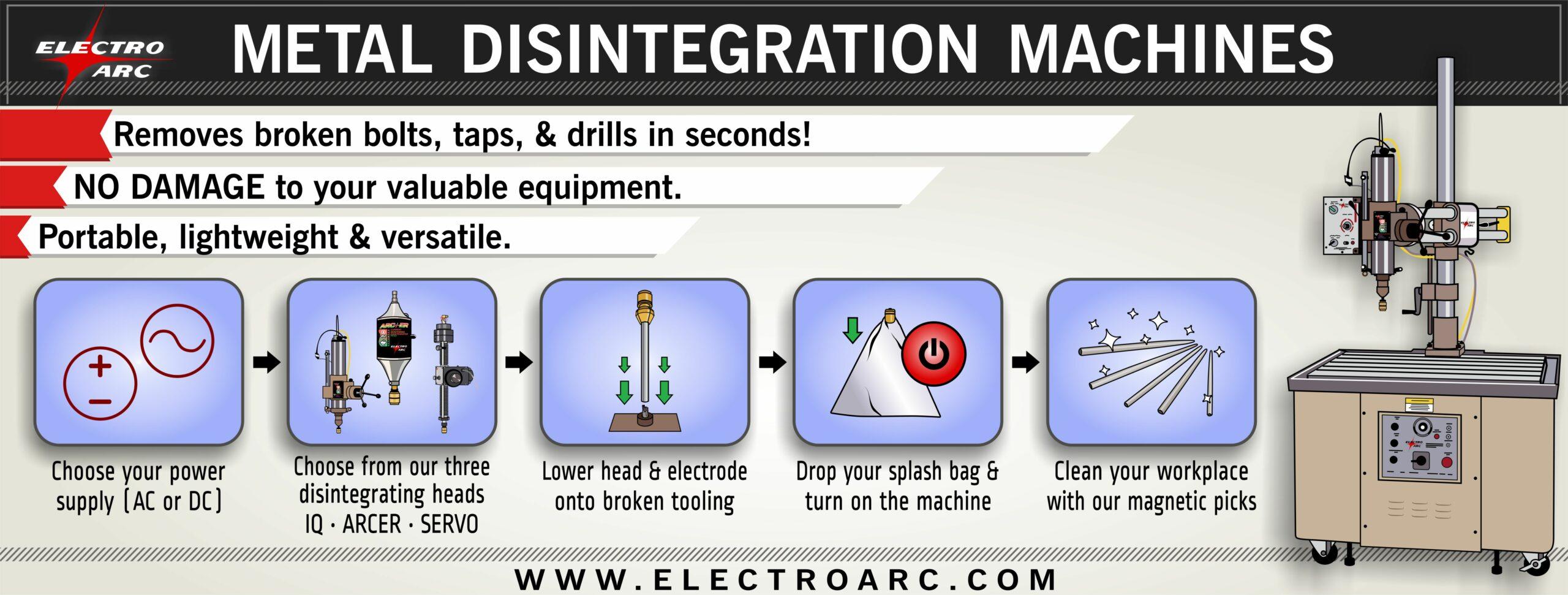
You can use Electro Arc metal disintegration machines to quickly and easily remove the broken-off tap, drill, and or bolt without damaging your valuable equipment. In the infographic above, you can see the details of our precise spark erosion process. Please refer to the following recommendations to choose the right metal disintegrator for your needs.
How to choose the right metal disintegrator for your application:
Both AC and DC machines run 110 to 600 volts to vibrate AC machines make and break 50 or 60 times per second, while DC machines are at 120 times per second. DC power can maintain higher arc levels and sustain a larger arc. With DC machines you can use larger electrodes like square or hex-shaped carbon to drill faster and make larger holes.
You can use the Arc-er head with our portable metal disintegrators and you can use it directly with machines like a Bridgeport. The IQ head provides faster-cutting speed and can be used with larger electrodes. You will receive a Servo head with our DC machines.
Portable machines are great for on-site application. If you need to take the metal disintegrator to the part, a portable metal disintegrator is for you. Off-road vehicle repair, mining operations, submarines, and repairs on the line are some great examples that would benefit from a portable machine.
You will want a tabletop machine if you are working on parts that can be taken to the machine for disintegration. We offer tabletops ranging in sizes and can create custom table tops if needed.
We offer electrodes made of graphite, copper, and molybdenum. Depending on the hardness of your piece, you will want to choose the appropriate electrode. Please refer to our sizing charts to choose the best one for your needs.
Step 5. What kind of material are you working with?
If you are working with carbide, you will want to choose a machine with “C” in the model number such as our 2-SEC which is a more compact tabletop machine offering the durability and power to disintegrate carbide.
Imagine you’re on the production line working on a large manufacturing machine. Everything seems to be running smoothly, until crack, a tap has broken off in the machine. A person breaks the tap, not the machine.
Unable to retrieve the broken piece without damaging the machine or stripping the threads of the casting, you are left with two options. You can replace the broken machinery, which comes at a high cost and slows productivity, or you can apply spark erosion, solving your problem in seconds rather than hours or days and for a quarter of the cost.
Spark erosion, metal disintegration, electrical discharge machining; if you work in any industry that utilizes machinery you’ve probably heard one or more of these terms. Each of these titles is used to explain the process of removing metal using electric currents under carefully controlled conditions.
How does the spark erosion process work?
While (EDM) spark erosion can be used to create specific metal parts, it is also commonly used to remove broken drill bits, taps, bolts, and studs from within a machine casting without damaging the threads or casting itself. This is called MDM.
Spark erosion is conducted through metal disintegration machines (EDM). These machines use electrodes to send low voltage/ high current electrical charges that melts the designated piece of metal at the same time cold water thermal shocks the molten steel and pulverizes it into micro-size pieces and flushes it away.
Because there is no direct contact between the electrodes and the machine casting, spark erosion allows you to work with even the most intricate sections and weak materials without risking distortion. It is this precision that makes spark erosion the most effective way to salvage parts that would otherwise be deemed unusable.
Five steps to applying spark erosion
Step 1: Get your metal disintegration machine ready. Electro Arc has a variety of options to choose from depending on your need, includingportable,table top, andspecialized metal disintegrators. Use our new Machine Builder if you are not sure which machine is best for your application.
Step 2: If you are using a portable machine, attach the provided portable electrode head to your drill press, CNC machine, lath, or any type of machine tool.
Step 3: Align the electrode to ensure it’s centered over the object you plan to remove and lower the splash bag. Verify that the bolts are tight. Each machine comes with a splashguard mechanism for safety purposes in order to keep sparks contained and prevent eroded metal from flying.
Step 4: Switch on the power supply. Portable metal disintegrators come with a small, rolling power supply cabinet that is easily transportable. The power supply features a built-in coolant tank and heat selector knob. For easy usability, all machines come with a chart that directs you on exactly which heat setting to use for each size broken tap or drill that you’re planning to remove.
Step 5: Turn the heat selector knob to the desired temperature and begin the process. Within seconds, the MDM machine will finish its cut. You can then clear the hole of any remaining debris using the provided air compression tool and see that your part has been completely recovered, casting, and threads left unscathed.
Yo can see the Electro Arc process in action, with video tutorials and case studies onElectro Arc’s YouTube Channel. Since Stillion Industries purchased Electro Arc in 2019, we have created a new channel with updated videos as well.
Advantages of using spark erosion machines
In aprevious blog post, we discussed the many benefits of using Electro Arc’s spark erosion machines, some of which include:
Simple operation
Unbeatable price
Relatively lightweight and easy to maneuver
Quick setup and breakdown
Easily manageable for one person
Little-to-no maintenance; simply keep it filled with fresh coolant
Spark erosion is the fastest and most cost-effective solution to recovering machinery that has been compromised by broken tools. For 75 years, Electro Arc has been perfecting this process and supplying premium metal disintegrators at affordable prices throughout the world.
You can see lots of broken bolt removal examples which illustrate how an Electro Arc metal disintegrator will benefit your company and save you money.
Electro Arc’s 3-S portable metal disintegrator is featured below. You do not need dielectric fluid to use Electro Arc machines, just coolant. The 3-S is easy on your pockets and convenient for you to use. Our metal disintegrators remove broken taps and drills without damage or coming into contact with the part. You can also use an Arc-er Head with other machine tools like the drill press in the video below:
What is a metal disintegrator?
You have probably heard a metal disintegrator referred to by many names including; tap extractor MDM machine, tap burner, tap zapper, and spark eroder. You can use these metal disintegration machines to remove broken bolts, broken taps, and broken drills without damaging your part. Cheap alternatives are available but can cause more damage or break easily. With an Electro Arc metal disintegrator, you get the precision, speed, and value without the headache of replacing parts on expensive equipment.
Broken tap removal service
You may experience broken taps in any situation, even when drilling and tapping a riffle, the risk of a broken tap is present. It may be tempting to use a simple cheap product like ex-out or Tap Magic, but as many of you know, this often makes the problem worse.
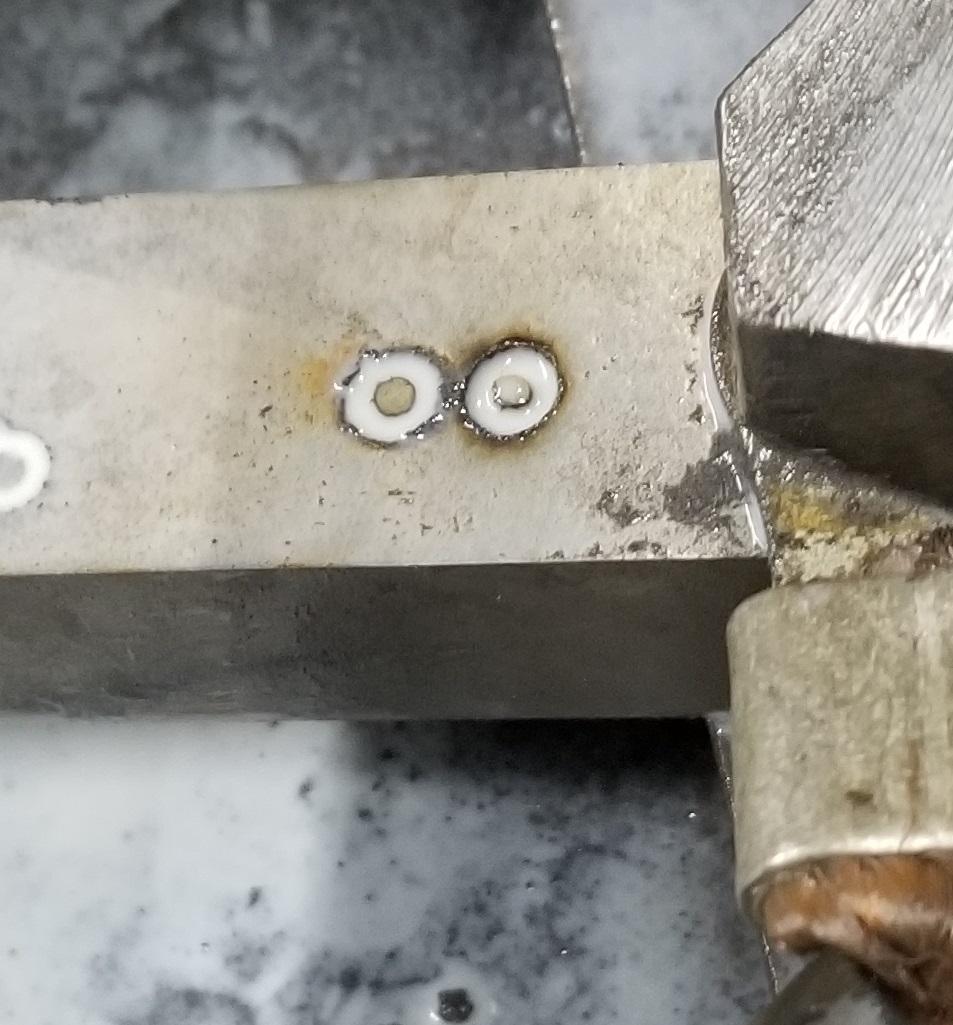
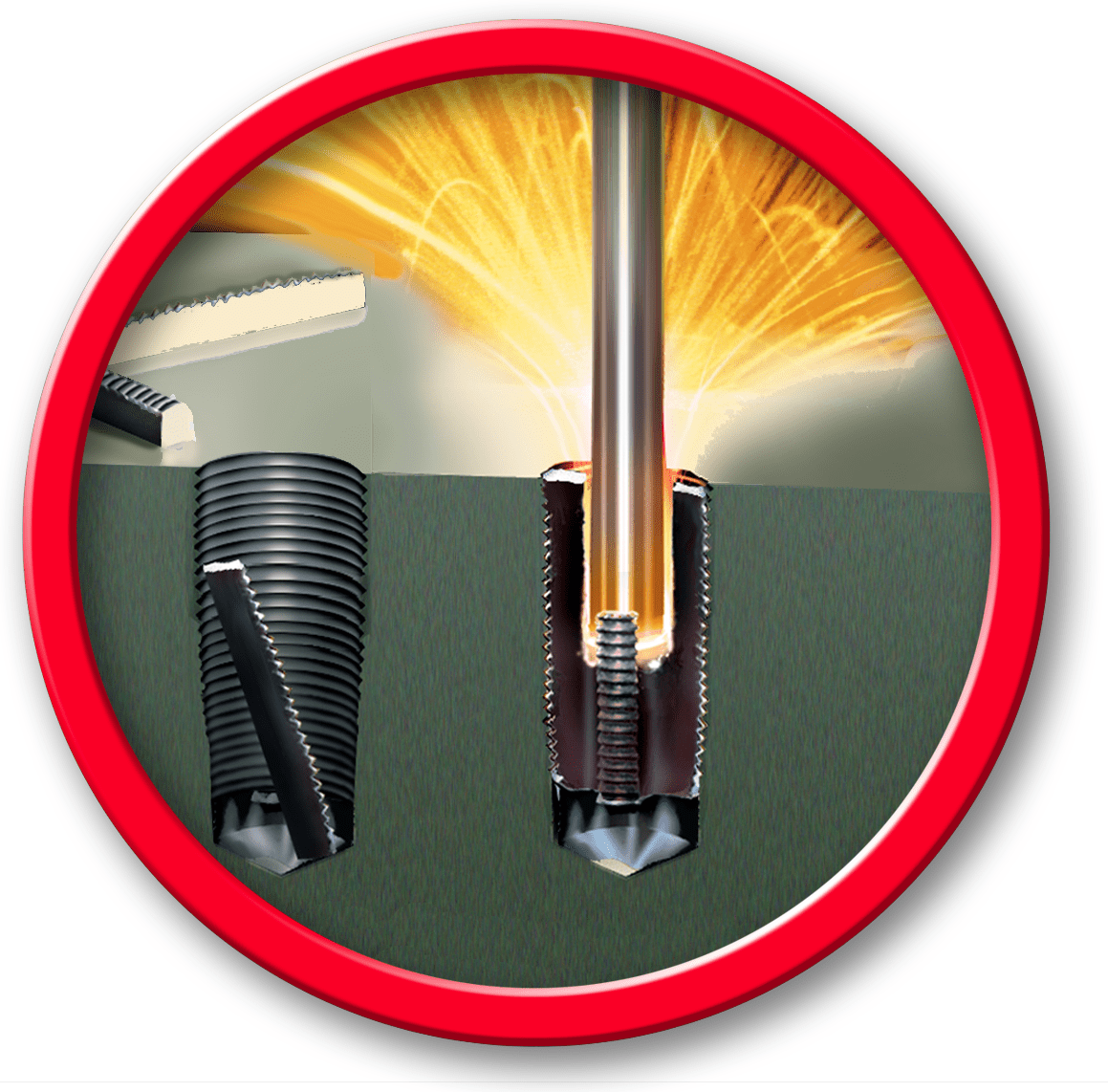
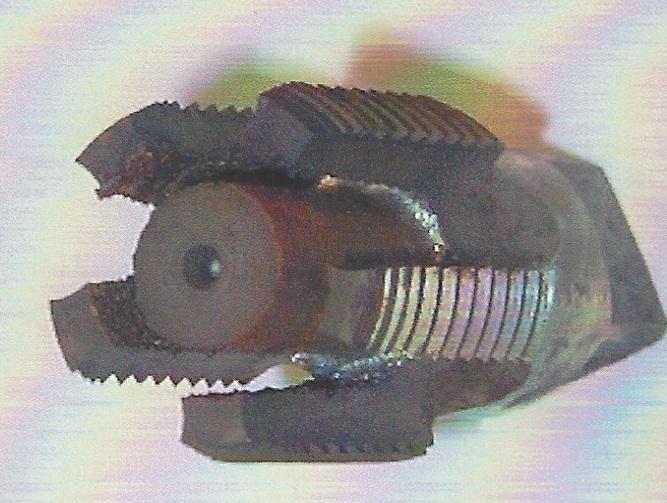
When you are working with broken taps it is important to remember that the center part is solid. Meaning the broken tap can be broken and essentially removed. Taps with a thread size smaller than M12 should be removed by breaking the center. In some cases, your tap will have a very large thread. If this is the case we advise that you divide it into halves for removal. You do not have to apply the electrode to the largest depth. When it reaches the desired depth just turn up the Arc-er head and begin to remove the debris. You can then continue the process of disintegration with your electrode. The power of a metal disintegrator is established by creating a series of electric arcs or discharges that erode the broken metals into smaller particles.
This produces sparks that move between the broken piece and the electrode cutting through the broken machine part. A puddle is created by the spark (also known as the hot plasma) as a result of the workpiece being melted by the electrical discharge produced by the electrode. The small amount of dielectric is vaporized which creates bubbles around the spark.
Sparks illustrated
It is important to keep your work area clean. A slower removal rate increases the rate of tear which is related to the rate of removal. The head is located in the flush area which helps to speed up the time for metal removal. The result of the removal also affects the size of the spark. Big and long sparks lead to a bigger depth and a rougher surface. For a finer finish, smaller sparks, a higher wear rate, and low removal rate are required. There are copper alloys that have been designed to maximize the process of spark eroding and offer better wear resistance and improved machinability.
Are you wondering what the best way to remove broken drill bits from metals is? Electro Arc has been providing high-quality broken tap, drill, stud, and bolt removal EDM / MDM machines since 1947. Our technology safely removes the broken drill in seconds without causing any damage to your part. Our spark erosion and metal disintegration technology can save you thousands of dollars by not causing damage to expensive parts. Please, take a moment to review how our spark eroders work.
Examples of disintegration with an Electro Arc metal disintegrator
Get the Job Done Right with Electro Arc
Electro Arc’s unique process disintegrates only the center out of a broken tap or drill leaving its threads intact. You can use this process to cut square or round shapes to back out studs or bolts or to remove large studs with a series of cuts. Emboss identification on rolls of steel, bore, and counterbore holes. You can reclaim expensive parts and provide immediate repairs on all types of equipment. Thus you will experience fewer production overruns and late deliveries.